

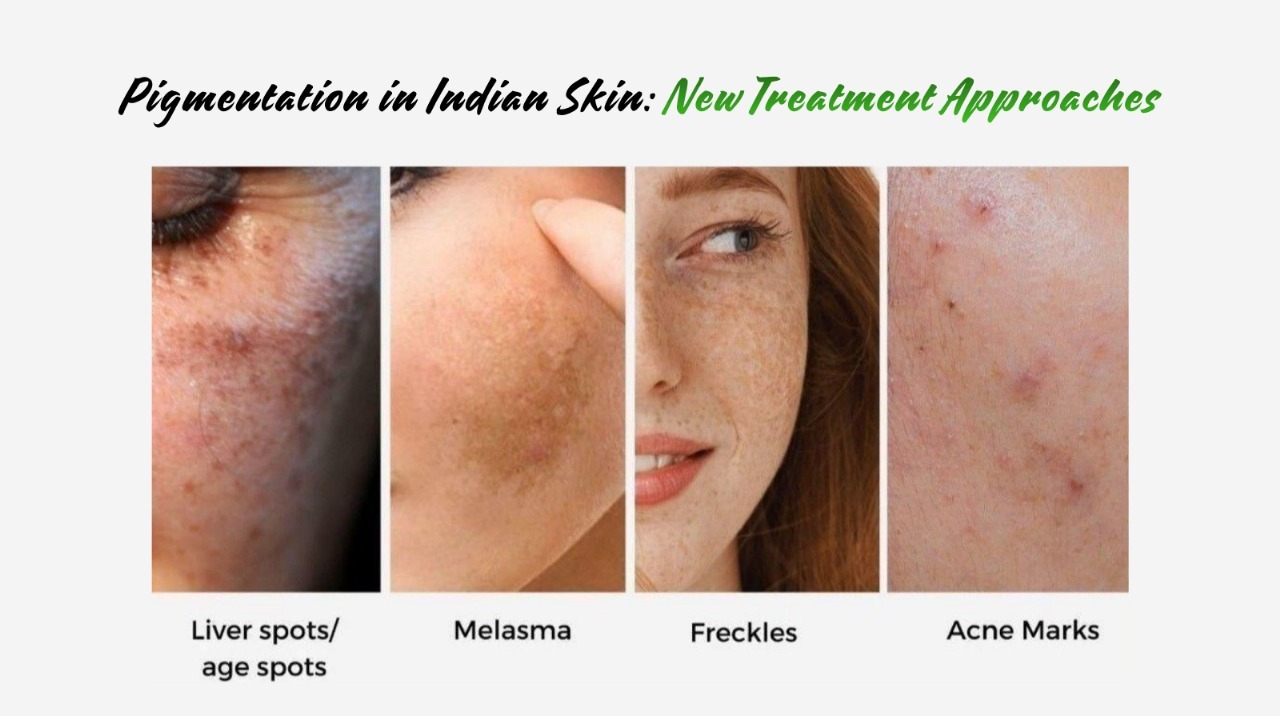
Pigmentation is one of the most common skin concerns among Indians due to high UV exposure, humidity, hormonal factors, and our melanin-rich skin type. As we step into 2025, dermatology and skincare science have introduced safer, faster, and more barrier-friendly ways to treat pigmentation without damaging sensitive Indian skin.
This guide covers the latest research-backed treatments, ingredients, routines, and in-clinic options tailored specifically for Indian skin tones.
Why Pigmentation Is More Common in Indian Skin
Indian skin (Fitzpatrick Type III–V) contains more active melanocytes, making it naturally prone to:
- Melasma
- Post-inflammatory hyperpigmentation (PIH)
- Sun tanning
- Dark spots from acne
- Uneven skin tone
Heat, sunlight, hormonal fluctuations, and harsh products make pigmentation stubborn and long-lasting. That’s why newer, gentler approaches in 2025 focus on:
- Protecting the skin barrier
- Reducing inflammation
- Targeting melanin production from multiple pathways
New Treatment Approaches for Pigmentation in 2025
- Multi-Pathway Pigment Blockers (More Effective Than Single Ingredients)
Instead of relying only on vitamin C or niacinamide, 2025 formulations use multi-pathway depigmenting cocktails that target melanin formation at several steps.
Key ingredients:
- Tranexamic Acid (3–5%) – Best for melasma and stubborn patches
- Azelaic Acid (10–20%) – Treats PIH + active acne
- Alpha Arbutin (2%) – Safe brightening
- Kojic Dipalmitate – A stable and less irritating form of kojic acid
- Acetyl Glycyl Beta-Alanine – A new peptide that blocks melanin transport
- 4-Butylresorcinol – Strong tyrosinase inhibitor (dermatologist favorite)
Why it works:
Pigmentation is caused by multiple pathways, so combining ingredients speeds up results with fewer side effects.
- Barrier-Repair + Brightening Hybrid Serums
One of the biggest 2025 trends is combining brightening actives with barrier-repair ingredients.
Popular combos:
- Niacinamide + Rice Water + Ceramides
- Tranexamic Acid + Peptides
- Azelaic Acid + Squalane
- Vitamin C + Centella Asiatica (to reduce irritation)
Why it works:
Strong actives work better when the skin barrier is healthy. This reduces inflammation the core trigger for pigmentation.
- Next-Gen Vitamin C: Low-Irritation, High-Stability Forms
Traditional L-ascorbic acid irritates Indian skin in humid climates. In 2025, the shift is towards:
- Ethyl Ascorbic Acid (EAA)
- Magnesium Ascorbyl Phosphate (MAP)
- THD Ascorbate
These give vitamin C benefits without stinging, dryness, or oxidation.
- AI-Personalized Pigmentation Mapping
Many dermatology clinics in 2025 use AI skin scanners that detect:
- Depth of pigmentation
- Whether it is epidermal, dermal, or mixed
- UV damage
- Melanin concentration
This allows the doctor to customise treatment for faster, targeted results.
- Microchanneling for Deeper Pigmentation
A milder, safer alternative to microneedling, microchanneling delivers ingredients like:
- Tranexamic acid
- Glutathione
- Melanin inhibitors
Directly into the skin without trauma. Excellent for melasma and deep pigmentation.
- No-Downtime Laser Treatments (2026 Upgrades)
Lasers have evolved and become gentler for deeper Indian skin tones.
Latest options:
- Q-Switched Nd:YAG (1064 nm) – gold standard for pigmentation
- Picosecond lasers – lower heat, faster results
- Hybrid laser toning – combines two wavelengths
- Low-fluence laser resurfacing – safer for melasma
Modern lasers minimize:
- Heat damage
- PIH
- Downtime
Making them suitable for Fitzpatrick III–V.
- Melanocyte-Calming Peptides
Peptides like Oligopeptide-68, Nonapeptide-1, and Palmitoyl Tripeptide-5 are replacing harsh whitening agents in 2025.
These peptides:
- Reduce melanin production
- Minimize inflammation
- Even out skin tone
- Are suitable for sensitive skin
These are ideal for long-term maintenance.
Best Pigmentation Routine for Indian Skin (2025)
Here’s a simplified routine using the safest new actives:
Morning
✔ Gentle cleanser
✔ Antioxidant serum (EAA or THD vitamin C)
✔ Niacinamide + Rice Water + Ceramides serum
✔ Lightweight moisturizer
✔ Broad-spectrum sunscreen SPF 50 PA++++ (most important!)
Night
Option A (Mild Pigmentation)
✔ Cleanser
✔ Alpha arbutin + peptides
✔ Ceramide moisturizer
Option B (Stubborn Pigmentation / Melasma)
✔ Cleanser
✔ Tranexamic acid serum
✔ Azelaic acid (2–3 days per week)
✔ Ceramide cream
Option C (Acne + Dark Spots)
✔ Cleanser
✔ Azelaic acid 10%
✔ Niacinamide
✔ Non-comedogenic moisturizer
Lifestyle Changes That Make a Big Difference
- Avoid peak sunlight (11AM–3PM)
- Reapply sunscreen every 2–3 hours
- Use hats/scarves during travel
- Include antioxidants in diet (berries, green tea, tomatoes)
- Avoid picking pimples
When to See a Dermatologist
Seek medical treatment if:
- Pigmentation keeps returning
- Patches appear during pregnancy
- You have mixed or deep dermal melasma
- Over-the-counter products are not working after 8–12 weeks
Final Thoughts
Pigmentation in Indian skin is multi-layered and chronic but with the new 2025 treatment strategies, it can be managed effectively and safely. The shift from harsh bleaching agents to barrier-friendly, multi-pathway brightening is a huge step forward.
Whether you choose advanced serums or dermatologist treatments, consistency and sun protection are the keys to clear, glowing skin.





It’s great to see more attention being paid to how sensitive Indian skin responds to treatments! The focus on protecting the skin barrier is key, as harsh treatments can often make pigmentation worse in the long run.