
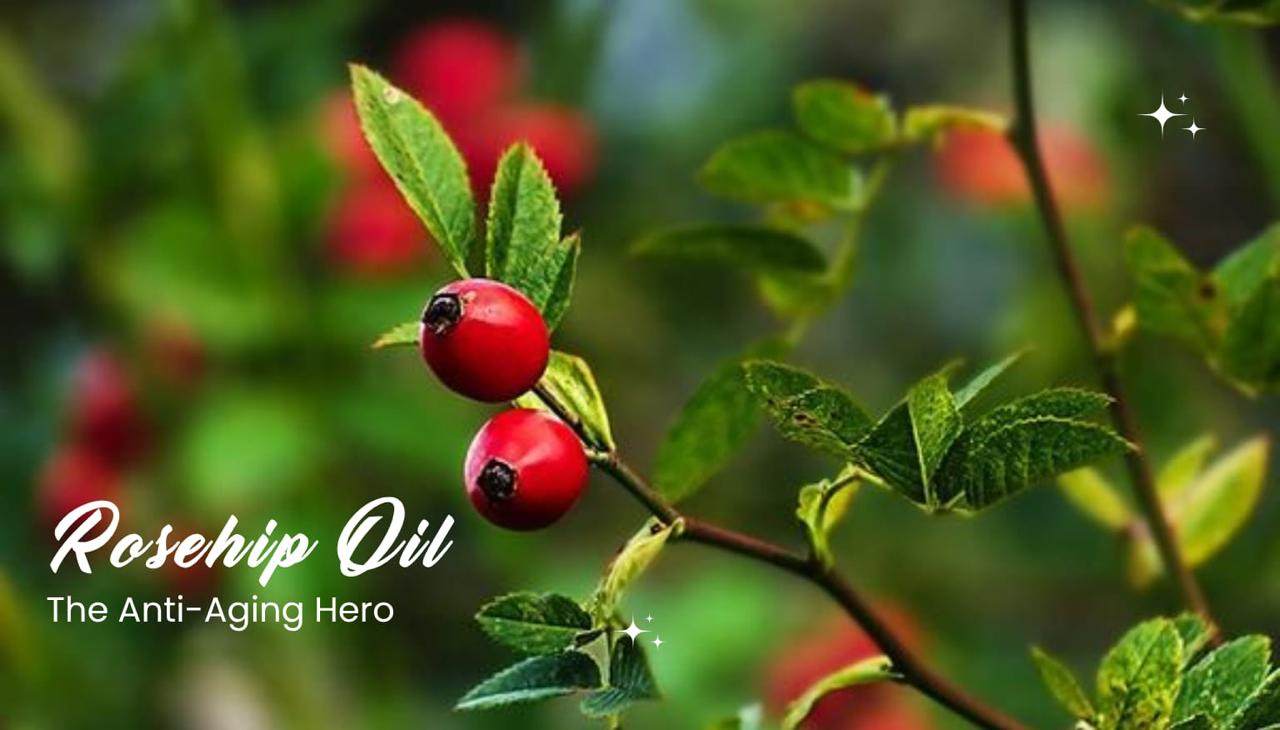
1.“Rosehip Oil: The Anti-Aging Hero Your Routine Needs”
Rosehip oil is your new skincare best friend if you’re looking to achieve that youthful, healthy glow without a complicated 10-step process or pricey procedures. Rich in vitamins, antioxidants, and vital fatty acids, this golden oil has earned the moniker “nature’s retinol” for good cause. Rosehip oil may be the easy, all-natural remedy your skin has been longing for, regardless of whether you’re battling dullness, dark spots, or fine wrinkles.
2. “Jojoba Oil: The Closest Thing to Your Skin’s Natural Sebum”
Jojoba oil may be the answer for you if you’ve ever thought that oils don’t work for your skin since they’re either too thick, clog your pores, or leave you feeling oily. Why? Since it’s a liquid wax ester that nearly exactly replicates your skin’s natural sebum, it’s not really an oil. This implies balance, moisture, and radiance without the oily side effects. It’s a liquid wax made from the seeds of the North American native jojoba plant, it has a neutral fragrance and a pale, golden hue. Why It’s So Skin-Friendly? Mimics sebum, moisturizes without clogging, packed with minerals, B-complex vitamins, and vitamin E reduces irritation, reduces inflammation, and strengthens the skin’s protective layer. Extremely versatile—works well on the face, body, hair, and cuticles!
3. Argan Oil: “Why Argan Oil Is Liquid Gold for Dry Skin”
Argan oil is the hydration hero you didn’t know you needed if your skin feels tight, dry, or lifeless, especially in the winter. With its rich colour and even more soothing elements, this Moroccan beauty staple—dubbed liquid gold—makes dry skin feel smooth, soft, and incredibly radiant.Extracted from the Moroccan native Argan tree’s kernels, fast-absorbing, non-greasy, and lightweight naturally abundant in antioxidants, vital fatty acids, and vitamin E. Argan oil gives Deep hydration, rich in Vitamin E helps to Protect skin from environmental damage & locks in moisture, essential fatty acids like oleic + linoleic acid restores skin’s barrier function. Anti-inflammatory effect soothes redness, irritation, and flakiness. Argan oil helps reduce the appearance of fine lines, dry patches, and even stretch marks.
4. Tea Tree Oil: “Tea Tree Oil for Acne: Powerful, But Is It Safe?”
Tea Tree Oil is such a hot topic, especially in the acne-prone skincare world. It’s known for being powerful and “natural,” but people are right to wonder if it’s too strong or if it could irritate their skin. The Australian Native Melaleuca alternifolia tree yields tea tree oil from its leaves. Its antibacterial and restorative qualities have been utilised for generations, particularly in the treatment of wounds, fungus infections, and acne. It eliminates Propionibacterium acnes, the bacteria that causes acne. It soothes red, swollen pimples by reducing inflammation, removes greasy stains and whiteheads. With regular, careful application, post-acne marks may lighten. Always dilute tea tree oil with a carrier oil like jojoba, rosehip, or aloe vera gel.
5. “Coconut Oil for Skincare: Miracle Ingredient for Silky skin, naturally?”
Coconut oil is rich in fatty acids, has antimicrobial properties, and gives your skin that soft, nourished glow. Lauric and capric acids, found in coconut oil, are excellent for maintaining healthy skin because due to antibacterial qualities, they destroy dangerous microbes that develops on our skin. Coconut oil is great for dry skin because it hydrates the skin and strengthens its natural protective layer, which helps the skin retain moisture. Coconut oil can help treat acne because of its anti-inflammatory qualities. Coconut oil for skin has been shown to help even out uneven skin tone, minimise dark spots, and calm facial irritation. It promotes the natural synthesis of collagen, which increases skin suppleness and results in tighter skin.